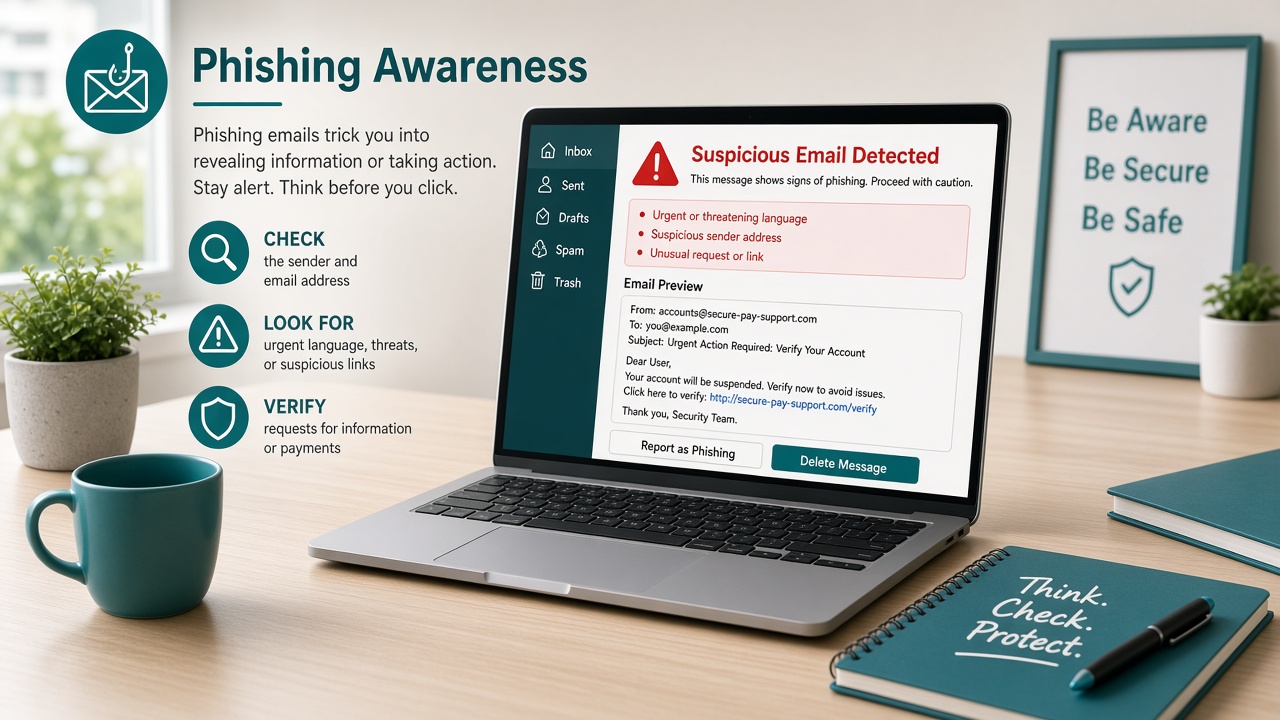
Phishing is one of the most common ways criminals attempt to steal cryptoassets from wallet users. Rather than breaking blockchain cryptography, attackers typically trick people into revealing credentials, approving malicious transactions, or visiting fake websites. Understanding how these attacks work can help wallet users recognise and avoid them.
This page is general educational information only. It is not financial advice, investment advice, or a recommendation of any wallet, exchange, or platform.
What Phishing Looks Like in Crypto
Crypto phishing often mimics legitimate communications from wallet providers, exchanges, or well-known projects. Messages may arrive by email, text, social media direct message, or pop-up advertisement. They frequently create urgency, claiming an account is at risk, a security update is required, or unclaimed assets are waiting.
The goal is to direct the victim to a fake website or form that captures seed phrases, private keys, or login credentials. Some phishing attacks also ask users to connect their wallet to a malicious application that requests transaction approval.
Fake Wallet Interfaces
Scammers can create websites that closely resemble genuine wallet login or recovery pages. These sites may use similar logos, colours, and layout. The critical difference is the destination: a phishing site sends entered credentials to the attacker instead of restoring a legitimate wallet.
Users should never enter a seed phrase into a website link received through email or messaging. Legitimate wallet recovery happens within the official application installed from a verified source, not through a browser form linked from an unsolicited message.
Malicious Transaction Requests
Some phishing attacks do not ask for seed phrases directly. Instead, they prompt users to connect a wallet to a website and approve a transaction. The transaction may grant unlimited access to tokens, transfer assets to an attacker-controlled address, or authorise a smart contract with hidden permissions.
Wallet interfaces typically display transaction details before approval. Reading these details carefully, including the recipient address and the permissions being granted, is an important defensive habit. Unfamiliar websites should not be trusted simply because they offer a reward or exclusive access.
Social Engineering Tactics
Attackers often impersonate customer support representatives. They may contact users who have posted publicly about wallet problems and offer to help resolve the issue. Real support teams do not initiate contact through direct messages asking for recovery phrases or remote access to devices.
Other tactics include fake giveaways requiring a deposit, fraudulent airdrop claims, and messages from impersonated contacts whose accounts have been compromised. The common thread is creating pressure to act quickly without verification.
Protective Habits for Wallet Users
Several habits can reduce phishing risk. Bookmark official wallet and service websites rather than clicking links in messages. Verify sender addresses carefully, as scammers often use lookalike domain names with subtle spelling differences.
Enable device and account security features where available, such as screen locks and two-factor authentication for exchange accounts. Keep wallet software updated through official channels. Be sceptical of any unprompted message involving cryptoassets, credentials, or urgent action.
What to Do If You Suspect Phishing
If you clicked a suspicious link but did not enter credentials or approve a transaction, close the page and avoid further interaction. If you entered a seed phrase or private key, assume the wallet is compromised and consider moving remaining assets to a newly created wallet using a fresh seed phrase.
If you approved a suspicious transaction, review your wallet activity immediately. Reporting the incident to relevant authorities or platforms may be appropriate depending on your location and circumstances.
Why Education Matters
Phishing succeeds because it exploits trust and urgency rather than technical vulnerabilities in the blockchain itself. Wallet users who understand common attack patterns are better equipped to pause, verify, and reject suspicious requests.
The goal of this education is not to create fear but to build recognition skills. Knowing how phishing targets wallet users is a practical step toward safer self-custody.